A damp patch on a ceiling may appear to reveal exactly where a roof is leaking, but water rarely travels in a straight line. Once it passes through the roof covering, it can follow underlay, timber, fixings or pipework before becoming visible inside the property. The actual defect may therefore be some distance from the internal stain.
Finding the true source is essential if a repair is to provide a lasting result. Rather than treating the most obvious symptom, professional roofers assess how water is entering and the route it follows through the roofing system.
How a Professional Roof Leak Investigation Works
Starting With the Internal Signs
An inspection often begins inside the property. The position, shape and condition of damp patches can provide useful clues about the leak.
Roofers may examine the loft or roof space for:
- Damp or stained timbers
- Wet insulation
- Marks on the underlay
- Moisture around fixings
- Daylight showing through gaps
- Mould or timber discolouration
The highest visible point of moisture can help narrow down the entry area. However, these findings must still be compared with the external roof because water may have travelled before reaching that location.
Examining the Roof Covering
The external inspection focuses on defects that could allow rainwater beneath the roof covering. These may include cracked, slipped or missing tiles, damaged slates, loose ridge materials or gaps caused by failed fixings.
Roofers also consider the pattern of the leak. A problem that appears only during wind-driven rain may indicate water entering beneath a displaced tile. A leak that develops after prolonged rainfall could point towards damaged underlay, ineffective drainage or water collecting around a roof junction.
The surrounding area must be checked carefully. Replacing one visibly damaged tile may not resolve the problem if nearby components have also deteriorated.
Checking Flashing and Roof Junctions
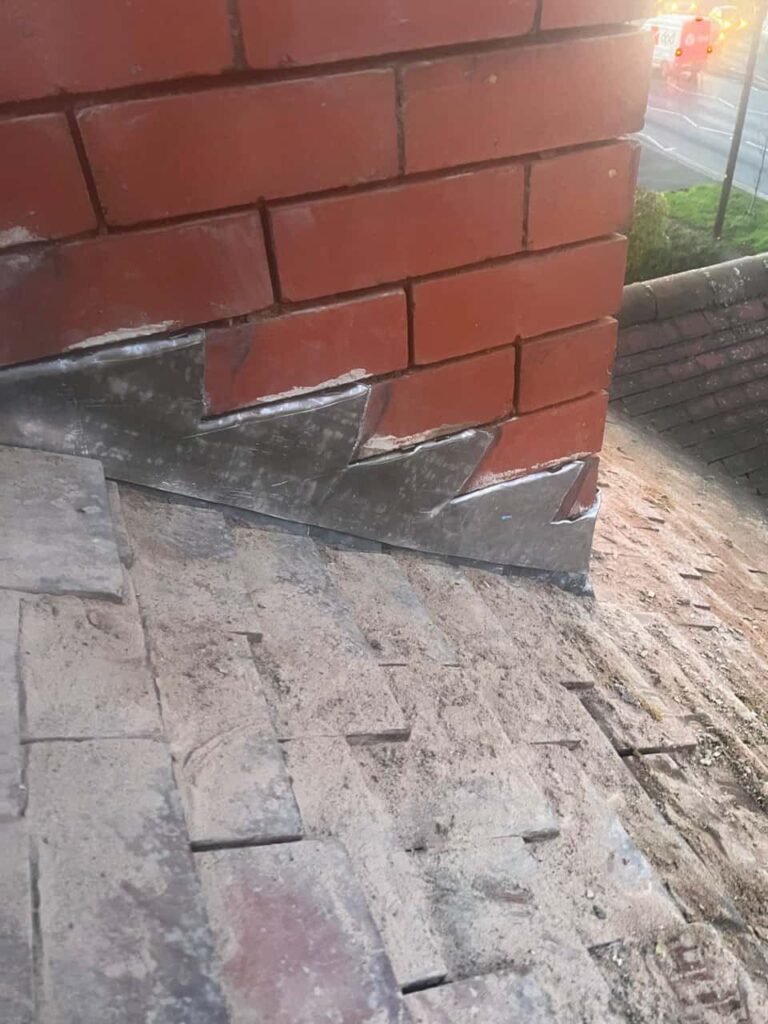
Many persistent leaks occur where different parts of a roof meet. Chimneys, valleys, abutments, dormers and roof penetrations all rely on carefully formed details to direct water away.
Lead flashing can lift, crack or pull away from masonry. Valley materials may become damaged or obstructed, while seals around vents and pipes can deteriorate. These defects are not always obvious from ground level, yet even a small opening can admit a significant amount of water during heavy rain.
A professional assessment examines how these details fit together rather than viewing each component in isolation.
Assessing Gutters and Roof Drainage
Not every leak is caused by a hole in the roof covering. Blocked or poorly functioning gutters can allow water to overflow against fascias, walls and roof edges. Debris may also obstruct valleys or outlets, causing rainwater to back up beneath surrounding materials.
Roofers check whether water can leave the roof efficiently. Signs such as staining beneath gutters, standing water or dampness concentrated near the eaves can indicate that drainage is contributing to the problem.
Correcting the route of the water may be just as important as repairing the affected roof material.
Looking for Defects Beneath the Surface
The visible covering is only one part of a roof. Underlay, battens and structural timbers also influence its ability to resist the weather.
If the underlay has torn, deteriorated or sagged, water passing beneath a tile may travel much further than expected. Damaged battens can affect how securely tiles sit, while timber movement may create gaps around otherwise sound materials.
Where accessible, these concealed components are inspected to establish whether the leak is isolated or part of wider deterioration.
Using Controlled Water Testing Where Necessary
Some leaks remain difficult to reproduce, particularly when they occur only during specific combinations of rainfall and wind. In suitable circumstances, a controlled water test can help isolate the defective area.
Water is applied gradually to selected sections while the interior is monitored. Beginning at a lower point and working methodically upwards helps avoid confusing the results. This process can reveal the point at which moisture begins to enter without unnecessarily disturbing sound parts of the roof.
Why Previous Patches May Not Solve the Problem
A temporary patch may stop visible water briefly without addressing the original cause. Moisture can also emerge in a new position if it is redirected by the repair.
Recurring leaks often indicate that:
- The wrong entry point was repaired
- More than one defect is present
- Water is entering through a nearby junction
- Underlay or supporting materials are damaged
- The repair did not integrate correctly with the surrounding roof
For this reason, the complete affected section should be assessed before further work is carried out.
Turning the Findings Into an Effective Repair
Once the water entry point and affected components have been identified, the repair can be matched to the actual defect. This might involve securing or replacing roof coverings, renewing flashing, restoring a junction, clearing drainage routes or repairing damaged supporting materials.
Accurate diagnosis helps limit work to the areas that genuinely need attention while reducing the likelihood of the leak returning.
Conclusion
Finding a roof leak requires more than locating the nearest damp patch. Water can travel through several layers of the roof, making a methodical inspection essential. By checking the interior, roof covering, junctions, drainage and concealed components, a roofer can identify the underlying cause and recommend an appropriate repair.
Mildenhall Roofing Repairs provides professional roof inspections and repairs in Mildenhall, Suffolk. If you have noticed a leak or recurring dampness, contact our team to arrange an assessment and establish where the water is really entering.
Call us on: 01638 591 491
Click here to find out more about Mildenhall Roofing Repairs
Click here to complete our contact form and see how we can help with your roofing needs.